Beyond Intuitive Eating: The Case for Tracking Macros
I have spent the better part of my life trying to understand what it means to be in "right relationship" with the things that sustain us. For years, I looked for the answer in clinical frameworks and the sterile language of pathology, believing that if I could just diagnose the disconnect, I could cure the hunger. I chased frameworks and modalities with earnest devotion, believing that if I understood enough, I would eventually arrive at an answer that made people feel whole.
But the longer I’ve sat with the complexity of being human, the more I’ve realized that our relationship with food is rarely about the food itself. It’s about the static.
In the wellness world, we are often presented with a binary that feels increasingly hollow. On one side, we have the rigid, metric-driven obsession of the tracker: the woman who lives in a world where her body is a math problem to be solved and every calorie is a debt to be reconciled. On the other side, we have the romanticized ideal of Intuitive Eating, the promise that if we simply "listen," our bodies will speak a clear and perfect truth.
For nearly twenty years, I lived and worked inside the Intuitive Eating model. I was trained as an eating disorder therapist to believe that any form of "tracking" was inherently a move away from the self, and a step toward the disordered and the clinical. I believed that "listening to your body" was the ultimate arrival point of healing.
But after decades of practice, and through the gutting of my own health crisis, I’ve found a hard truth that the wellness world often ignores:
Intuition is a luxury of the regulated.
If your blood sugar is a jagged mountain range, if your hormones are depleted, or if your nervous system is trapped in a decade-long cycle of bracing for the next disaster, your "intuition" is not a reliable guide. It’s a distorted radio signal. What we often mistake for our body’s "wisdom" is usually just a physiological response to a lack of data. If you are operating from a place of chronic depletion, "listening to your body" usually sounds something like a scream for quick-burning fuel at 3:00 PM. That isn't intuition; it's a distress signal. You cannot listen your way out of a physiological crisis.
The Static and the SignalMany women spend years in a state of high-alert vigilance, assuming that their inability to "just eat intuitively" is a personal failure. They think they lack willpower or that they are emotionally weak. In reality, their bodies are simply under-fueled and/or overstressed. When the body is operating in a state of physiological deficit, it loses the capacity to offer a signal you can actually trust. You are left trying to listen to a voice that is being drowned out by the urgent demands of a system that doesn't feel safe.
This is why I stepped away from the abstract ideal of intuitive eating and moved toward the tangible evidence of education.
To get back to a place where we can actually hear ourselves, we need an objective language to help us decode what is happening. We need to understand the architecture of the plate, not as a set of rules, but as a way to steady the body enough to actually hear it.
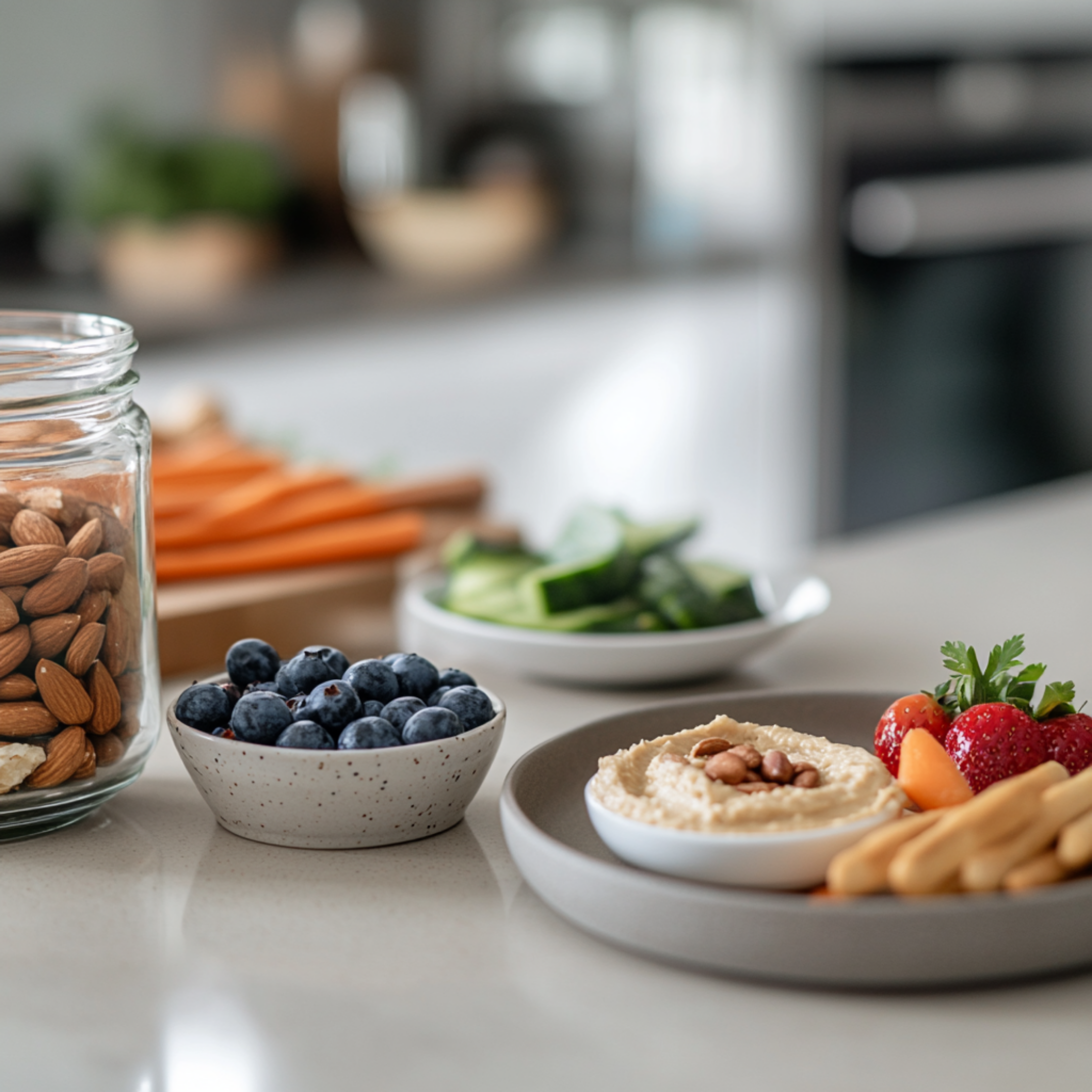
When we talk about macronutrients - protein, fats, and carbohydrates - we are not talking about "rules." We are talking about the three primary ways we can interface with our biology to create a sense of safety.
Protein is the anchor. Beyond "building muscle," it is the primary driver of satiety. It provides the steady, grounding signal that tells the brain the hunt is over, that the body is fed, and that it’s safe to settle. Without it, we are perpetually searching, a relentless, insatiable restlessness that no amount of "mindfulness" can soothe.
Fats are the slow-burning fuel. They provide the endurance that carries us through the long spaces between meals, acting as the stabilization that allows you to stay present in a conversation or lost in a book without the sudden, sharp interruption of an energy crash. But for women, fats are more than just a source of energy; they are a requirement for our endocrine health. They are the raw materials for the production of hormones like estrogen and progesterone. When we chronically under-eat fats in the name of "lean" eating, we aren't just losing fuel—we are losing the ability to regulate our cycles, our moods, and our long-term health. Without adequate fat, the system begins to downregulate, leading to the brain fog and hormonal irritability that we often try to "fix" with more restriction. In this way, fats are the foundation of our internal stability.
Carbohydrates are high-octane energy. They are the preferred energy source for your brain, your thyroid, and your nervous system. When we strip them away in an attempt to be "healthy," we often see a decline in sleep quality and a heightening of the very anxiety we are trying to fix. To fear them is to fear the energy required to inhabit your life fully.
The Paradox of TRACKING MACROSI know how the word "macros" sounds. It sounds like another cage. But there is a profound paradox in using numbers to eventually free yourself from numbers.
Tracking macros can be thought of as a short-term apprenticeship. It is a way to look at a plate and finally understand the "why" behind your fatigue, your cravings, or your sleeplessness. It is about building a library of internal references so that eventually, the tool becomes unnecessary. Please hear and understand this: counting macros is never intended to be something you have to do forever.
Think of it like a map. If you’re lost in the woods, a map isn't a set of handcuffs. It’s the thing that allows you to stop wandering in circles. You use the map until you find the trail. Once you know where you are, you can put the map in your pocket and just walk.
This process of gathering data inevitably leads us to a difficult conversation about change. There is a persistent shame that often accompanies the desire to change one's body, as if intentionality is a betrayal of self-love. I reject that. Honoring your body can look like wanting it to be more capable, more resilient, or more comfortable. It can be an act of stewardship to move toward a version of yourself that feels less burdened.
The apprenticeship of tracking isn't a commitment to hitting a perfect number for the rest of your life; it is the bridge between that desire for change and the lived experience of it. It is the transition from guessing to knowing.
When you spend a season intentionally balancing your protein, fats, and carbohydrates, you are doing so much more than just managing calories; you’re training your nervous system to recognize the feeling of being supported. You’re teaching your body, perhaps for the first time, that it no longer needs to live in a state of high-alert searching. You’re building a bridge between the clinical data and your lived experience.
The goal is to reach a point where the scale and the app are no longer the authorities. You track until you can look at a meal and know, with visceral confidence, how it will make you feel. You track until the static clears, and you can finally trust the signal again.
Once that education is integrated, the tool has served its purpose. You don't stay in the apprenticeship forever. You learn the craft, you master the terrain, and then you simply live it.